Botox in Winchester, Virginia
Thoughtful neurotoxin treatment guided by facial movement, anatomy, and The Layer Method™.
At Calibrae, Botox is not approached as a one-size-fits-all treatment. Danielle Wiley, PA-C evaluates how facial movement contributes to lines, tension, balance, and expression before deciding where treatment makes sense. The goal is refined, natural-looking results that fit the face — not frozen features or automatic dosing.
What Botox is
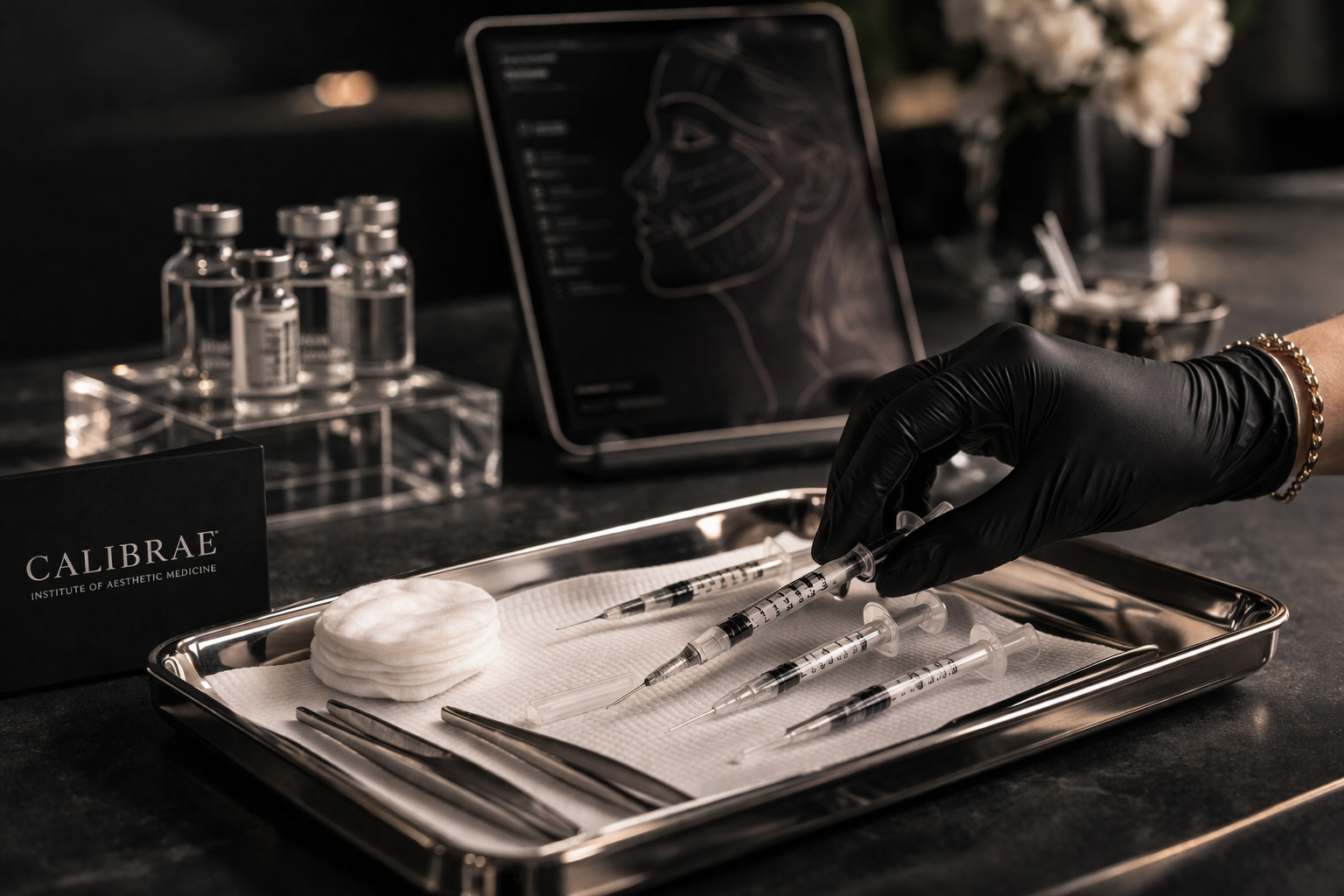
Botox is a neuromodulator used to temporarily soften repetitive muscle activity that contributes to dynamic lines and expression-related aging. It is commonly used to improve concerns such as frown lines, forehead lines, crow’s feet, and other areas where muscular pull affects facial appearance or balance.
How Botox fits The Layer Method™
Botox works within the movement layer. At Calibrae, treatment begins by identifying whether the visible concern is actually being driven by muscular activity. If movement is the driver, Botox may be the right first step. If structure, skin quality, or volume loss are more important, treatment may need to be staged differently.
Botox is not just about treating a wrinkle. It is about treating the movement that is creating it.
What Botox may improve
Who Botox is best for
Botox may be a good fit for patients who want a more refined, rested appearance, want to soften repetitive expression lines, or want to begin treating movement before lines become more deeply etched. It is also useful for patients whose facial balance is being affected by muscular pull rather than volume loss alone.
Botox vs Daxxify
Both Botox and Daxxify are neuromodulators, but they are not treated as interchangeable by default. At Calibrae, the right product depends on your facial movement, goals, treatment history, and overall plan. The decision is made through consultation and assessment rather than by trend or assumption.
What treatment is like
Treatment is performed in office and typically takes only a short time. Danielle evaluates facial movement dynamically, maps the treatment plan, and places product strategically based on anatomy and how the face moves. Most patients return to normal activity the same day with standard post-care guidance.
When results appear
Results do not appear instantly. Most patients begin to notice softening over the next several days, with fuller effect typically developing within about 2 weeks. Your final result depends on the treatment areas, anatomy, dosing strategy, and how your muscles respond.
A note on the Calibrae approach
Calibrae does not begin with a preset number of areas or a generic formula. Danielle Wiley, PA-C uses diagnosis-first treatment planning to understand what is actually driving the concern before deciding whether Botox belongs in the plan.