Sculptra in Winchester, Virginia
Gradual collagen support guided by facial structure, anatomy, and The Layer Method™.
At Calibrae, Sculptra is not approached as a quick filler replacement or a one-size-fits-all treatment. Danielle Wiley, PA-C uses Sculptra when collagen decline, facial thinning, or loss of deeper support is contributing to visible aging. The goal is not immediate fullness. It is gradual, natural-looking support that develops through your own collagen response.
Collagen support rather than instant correction
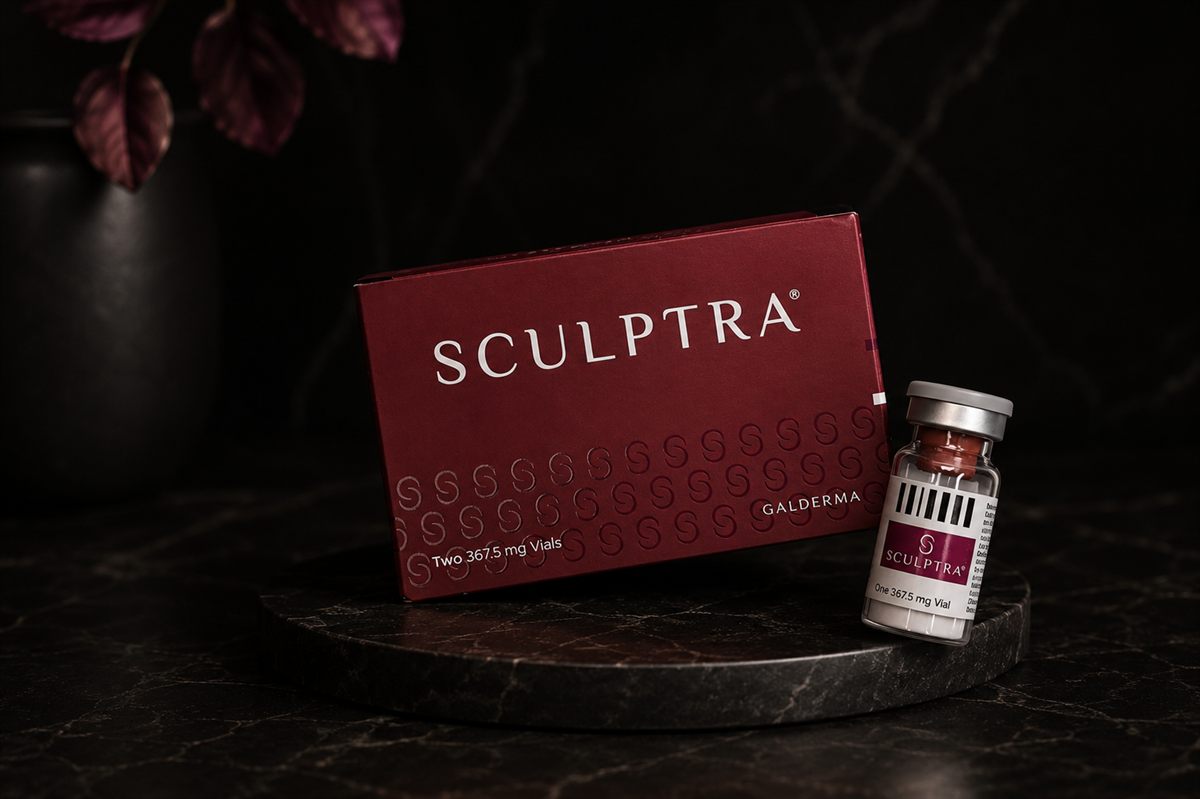
Sculptra is an injectable biostimulatory treatment made with poly-L-lactic acid, or PLLA. Instead of creating an immediate filled result, it helps stimulate the body’s natural collagen production over time.
This gradual response may improve facial support, firmness, and the appearance of collagen-related volume loss. The treatment is especially valuable when the visible concern is being driven by a weakening structural foundation rather than one isolated line or hollow.
Sculptra does not simply fill a space. It supports the tissue responsible for maintaining the face over time.
Where Sculptra fits
Sculptra belongs within the structure and collagen-support layer of The Layer Method™. Before recommending treatment, Danielle evaluates whether the concern is being driven by movement, skin quality, volume distribution, or deeper structural decline.
When collagen loss and support are the primary drivers, Sculptra may be used to strengthen the foundation before smaller details are addressed.
Sculptra is not about chasing every hollow. It is about rebuilding the layer that contributed to it.
Common reasons patients consider Sculptra
Treatment areas and recommendations are determined after an individualized facial assessment.
A gradual treatment for patients who value natural progression
Sculptra may be appropriate for patients who are noticing progressive collagen decline, facial thinning, laxity, or reduced structural support. It is often chosen by patients who prefer gradual improvement and want to avoid an instantly filled appearance.
It may also be considered as part of a longer-term collagen banking strategy when clinically appropriate.
Sculptra is not automatically recommended based on age alone. Anatomy, facial structure, medical history, treatment goals, and the amount of support needed all influence the plan.
Foundation and detail serve different purposes
Sculptra and hyaluronic acid dermal filler are not interchangeable. Each treatment serves a different role.
Sculptra
- Supports gradual collagen production
- Often used for broader structural decline
- Results develop progressively
- Designed to improve the foundation over time
- Does not create precise immediate contour in the same way as filler
Dermal Filler
- Provides immediate volume or contour
- Can target specific areas with precision
- Often used for support, proportion, or detailed shaping
- Results are visible immediately, although swelling may temporarily affect appearance
- May be used after the deeper foundation has been addressed
At Calibrae, Sculptra may be used for the foundation while filler is reserved for areas that need more precise support or detail.
What to expect during treatment
Treatment begins with a consultation and facial assessment. Danielle evaluates structural changes, areas of collagen decline, asymmetry, prior treatments, and the way the face has changed over time.
Sculptra is then placed strategically based on anatomy and the treatment plan. Appointments typically include cleansing, facial mapping, injection, and post-treatment instructions.
Most patients return to normal daily activity shortly after treatment. Temporary swelling, redness, tenderness, or bruising may occur.
Progressive improvement rather than an instant reveal
Immediately after treatment, patients may notice temporary fullness caused by the sterile water used during product preparation. This initial fullness typically decreases as the fluid is absorbed.
The true Sculptra result develops gradually as collagen production increases over the following weeks and months. Changes are progressive and may include improved support, firmness, contour, and overall tissue quality.
Results vary based on anatomy, age, collagen response, treatment plan, lifestyle, and the number of treatment sessions completed.
How many treatments are usually needed?
Sculptra is commonly planned as a series rather than a single isolated appointment. The appropriate number of vials and sessions depends on the degree of collagen loss, facial structure, age, weight changes, treatment history, and desired outcome.
At Calibrae, many treatment plans are staged over multiple sessions spaced several weeks apart. Danielle determines the recommendation after evaluating the face as a whole.
The goal is to use enough treatment to create meaningful support without treating beyond what the anatomy requires.
Supporting the treatment after your appointment
Patients receive individualized post-care instructions after treatment. These may include facial massage, avoiding strenuous activity for a limited period, and monitoring for expected temporary swelling or bruising.
Massage guidance can vary by clinical protocol and treatment plan, so Calibrae will provide the instructions that apply to your appointment.
Patients should contact the practice with any unexpected or concerning symptoms.
Diagnosis before product
Calibrae does not begin with a preset number of vials or an assumption that every hollow needs to be filled. Danielle Wiley, PA-C evaluates why the face has changed before choosing a treatment.
When deeper collagen and structural support are the true need, Sculptra may become the foundation of a staged plan. Movement, skin quality, and detailed contour can then be addressed separately when appropriate.
Treat the driver, not just the complaint.
Is Sculptra the right layer to treat first?
Request a consultation with Danielle Wiley, PA-C at Calibrae Institute of Aesthetic Medicine in Winchester, Virginia. Your treatment plan will be based on facial structure, collagen support, movement, skin quality, and your individual goals.
Sculptra questions
Is Sculptra the same as dermal filler?
No. Sculptra is a collagen-stimulating injectable that works gradually, while hyaluronic acid fillers provide more immediate volume and contour. They may be used separately or within the same staged treatment plan depending on the patient’s needs.
When will I see Sculptra results?
Temporary fullness may be visible immediately because of the fluid used during treatment. That fullness decreases, and the true result develops gradually over the following weeks and months as collagen production increases.
How many Sculptra sessions will I need?
The number of sessions varies based on anatomy, age, collagen loss, treatment goals, and the amount of support needed. A personalized recommendation is made after consultation.
Will Sculptra make my face look overfilled?
Sculptra is designed to support gradual collagen production rather than create an immediately filled appearance. Careful treatment planning and appropriate product placement are important for maintaining natural-looking proportions.
Can Sculptra be combined with Botox, Daxxify, filler, or SkinPen?
Yes, when clinically appropriate. Each treatment addresses a different layer. Neuromodulators address movement, filler provides targeted support or contour, SkinPen addresses skin quality, and Sculptra supports collagen and deeper structure. Treatments may be staged rather than performed at the same time.
Where is Calibrae Institute located?
Calibrae Institute of Aesthetic Medicine is located in Winchester, Virginia and serves patients from Winchester, Frederick County, Northern Virginia, and surrounding areas.