Lip Filler in Winchester, Virginia
Framing, proportion, shape, and support — not just adding volume.
At Calibrae, lip filler starts with the face around the lips, not the syringe. Danielle Wiley, PA-C evaluates the lip border, body, projection, symmetry, dental support, perioral tissues, chin relationship, and overall lower-face proportion before deciding what should actually be treated. The goal is a lip that fits the face.
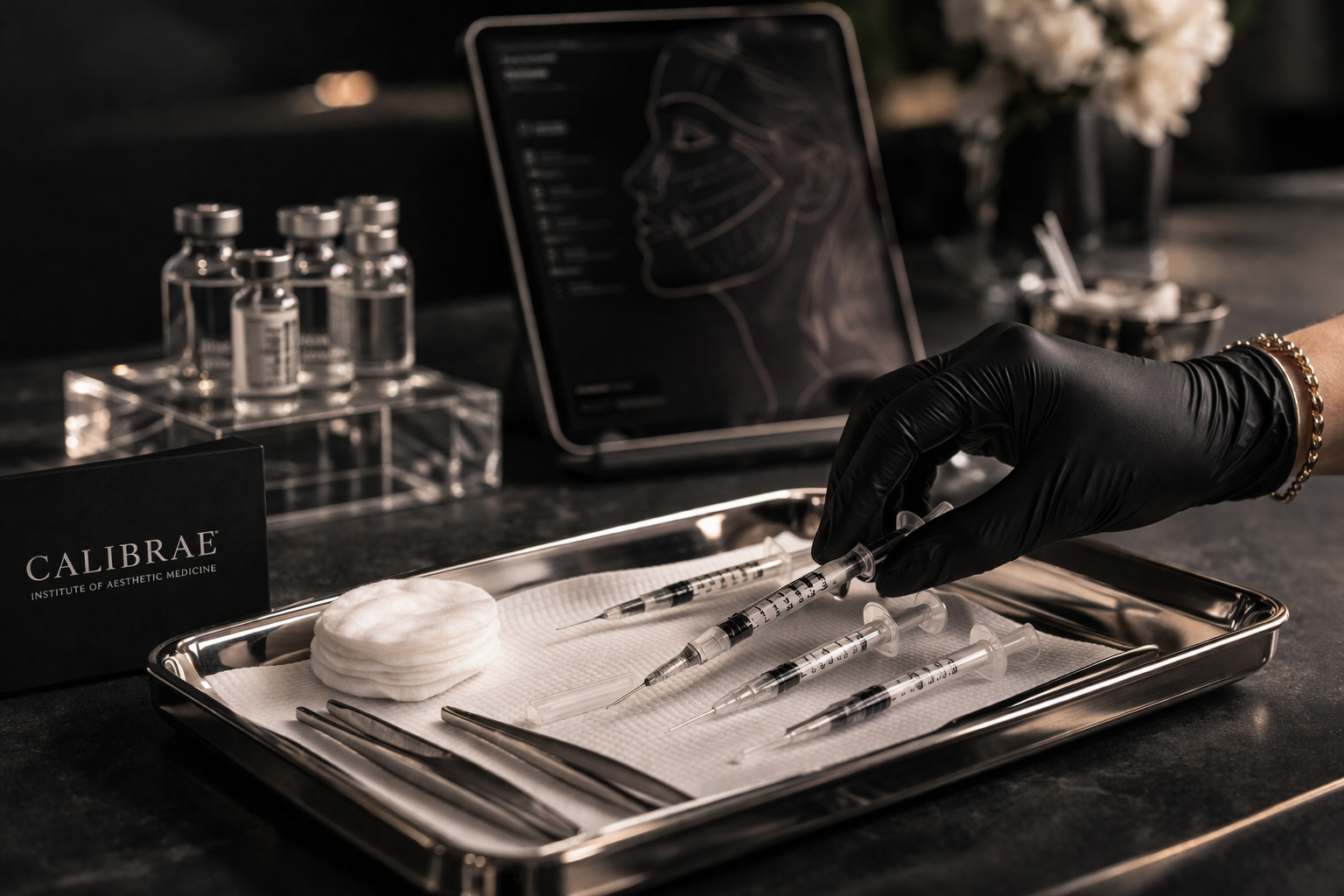
What lip filler is
Lip filler most commonly uses a hyaluronic acid gel placed strategically within or around the lips to refine shape, support, symmetry, border definition, projection, or volume. The treatment can be subtle or more noticeable depending on anatomy and goals.
At Calibrae, the amount of product is not the starting point. The starting point is identifying which part of the lip or surrounding structure is actually creating the concern.
Lip filler through The Layer Method™
Lips sit at the intersection of several layers. The visible lip itself may need superficial framing or volume, while the surrounding lower face may need deeper structural support. Sometimes the best lip result comes from treating the chin, perioral support, movement pattern, or another neighboring feature rather than simply adding more filler to the lips.
Diagnosis before product. Treat the driver, not just the complaint.
What we look at before injecting
Framing vs volume
Not every lip needs more size. Framing focuses on defining and supporting the existing architecture of the lip — including the border, shape, central contour, and transitions — while volume focuses more on fullness and projection.
Often, the most refined result comes from using both concepts in the right proportion rather than chasing volume alone.
What lip filler may improve
How much filler do I need?
There is no universal answer. Some patients need only a conservative amount for framing and refinement, while others may benefit from more product or staged treatment. Danielle bases the recommendation on anatomy, tissue capacity, previous filler, symmetry, and the size of the change you want.
Trying to force a dramatic change into one session can work against natural proportions. When needed, Calibrae prefers to build gradually.
Lip filler and facial balancing
The lips should not be evaluated in isolation. Chin projection, lower-face length, prejowl support, perioral volume, and facial profile can change how the lips appear. This is why lip filler may be part of a broader facial balancing plan rather than a stand-alone decision.
For patients with deeper collagen or structural changes, Danielle may also discuss Sculptra as a different layer of treatment.
What treatment is like
Treatment is performed in office after assessment, photography, and treatment planning. The lips and surrounding tissues are evaluated from multiple angles, and filler is placed according to the intended goal — framing, support, symmetry, projection, or volume.
Temporary swelling, tenderness, and bruising can occur. Swelling is commonly most noticeable early and then improves over the following days. Final assessment is best made after the initial swelling has settled.
Safety matters
Dermal filler is a medical procedure. Common temporary effects include swelling, bruising, tenderness, firmness, redness, and asymmetry related to swelling. More serious complications are uncommon but can include infection or vascular occlusion. Filler placed into a blood vessel can cause tissue injury and, rarely, vision complications.
Danielle reviews relevant medical history, medications, prior filler, recent dental work or illness, and other factors before treatment. Patients receive individualized post-care and instructions about when to contact the practice urgently.
The Calibrae approach to lips
The goal is not to create the same lip on every patient. Some faces benefit from a little more pout. Others need border support, asymmetry correction, better lower-face proportion, or simply preservation of what they already have.
Calibrae treats the lips as part of the face — and the face as a connected system of layers.
Lip Filler FAQ
Can lip filler look natural?
Yes. Natural-looking results depend on respecting anatomy, tissue capacity, facial proportions, and the relationship between framing and volume.
Can I improve shape without making my lips much bigger?
Often, yes. Strategic placement can focus more on framing, symmetry, and shape than on adding substantial volume.
How long does lip filler last?
Duration varies by product, metabolism, movement, amount used, and prior treatment. Your expected range is discussed after assessment.
How long will my lips be swollen?
Swelling is common after treatment and is usually most noticeable early. It generally improves over the following days, but every patient heals differently.
Do you use the same filler for every patient?
No. Product selection is based on the treatment goal, tissue characteristics, anatomy, and the type of support or movement required.
Where is Calibrae located?
Calibrae Institute of Aesthetic Medicine is located at 3343 Valley Pike, Suite 400, Winchester, VA 22602, serving Winchester, Frederick County, and surrounding communities.
Considering lip filler in Winchester, Virginia?
Start with the anatomy, proportions, and surrounding support — then decide whether lip filler belongs in the plan. Request a consultation with Danielle Wiley, PA-C.